A PDP refresh and Brand Store rebuild that moved every metric worth watching.
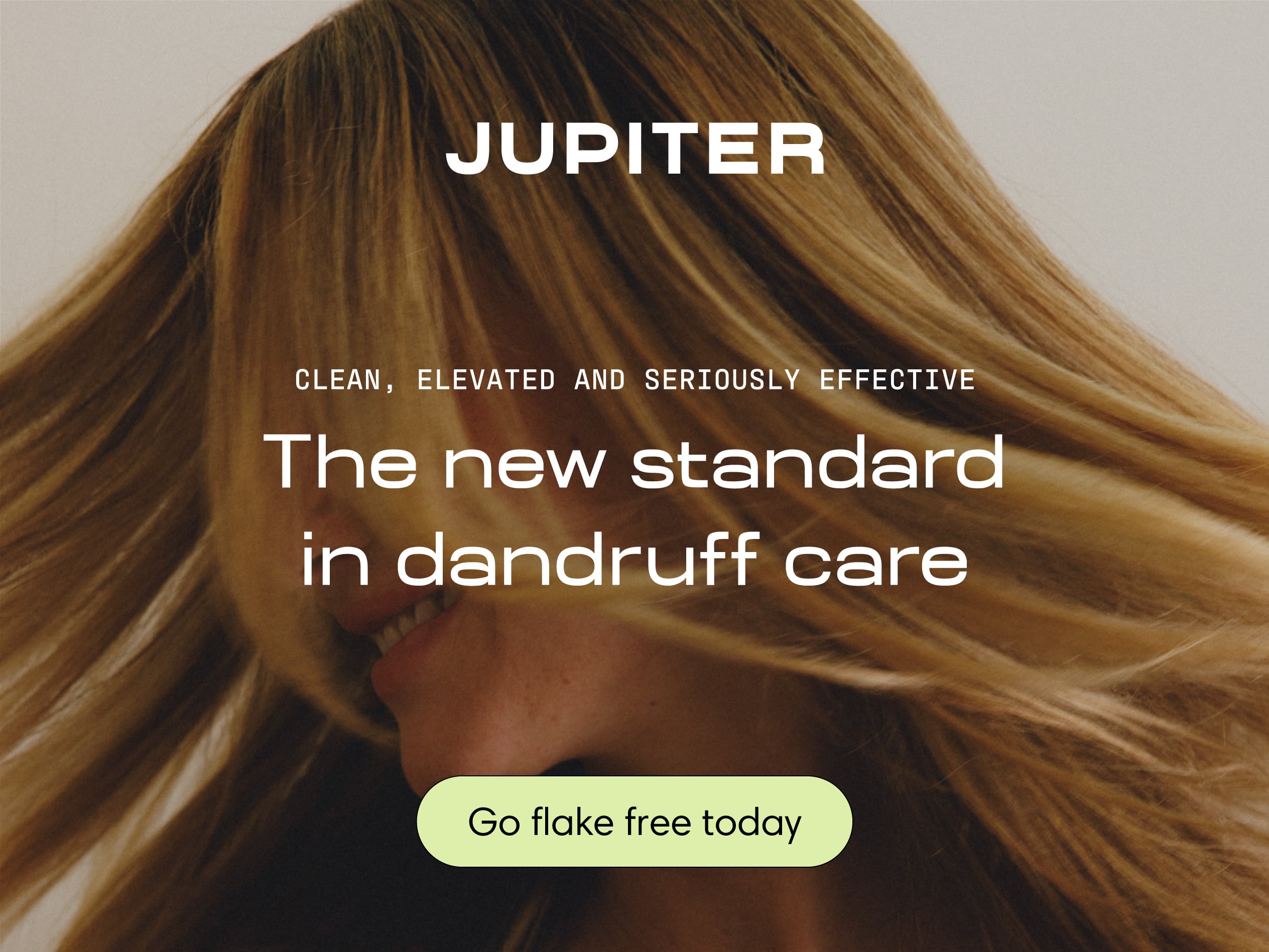
Jupiter is a dermatologist-developed dandruff brand helping women trade up from legacy drugstore solutions without giving up efficacy. When they came to CRUSH ahead of their 2026 brand rollout, their Amazon presence hadn't kept pace with where the brand was going. The creative was functional. It wasn't Jupiter.
The mandate: refresh the hero product listing, rebuild the Brand Store, and make every design decision accountable to a measurable outcome.
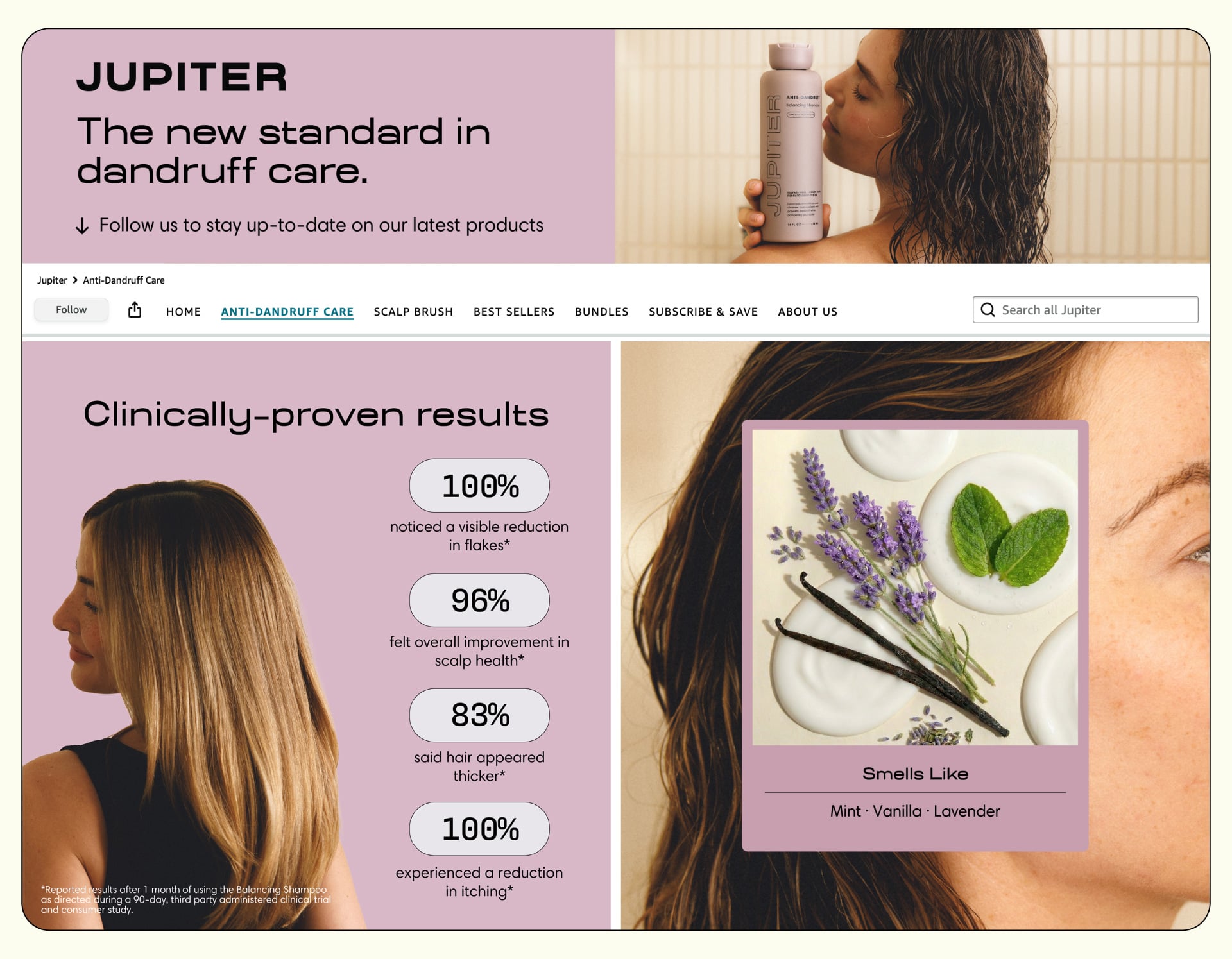
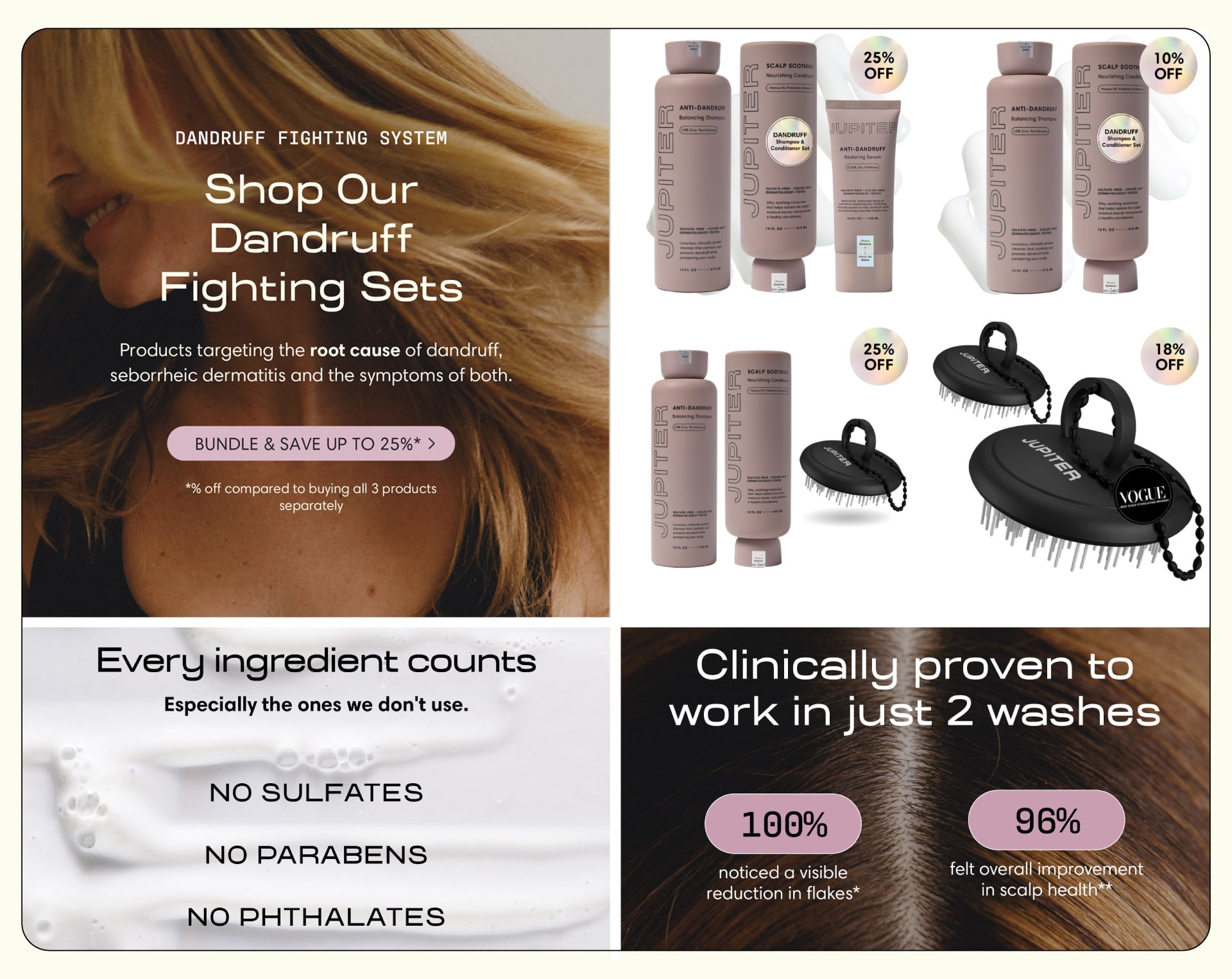
A Brand Store rebuild and full PDP carousel refresh drove a 26.6% increase in total views, an 11.1% sales lift, and an 18.4% jump in dwell time. The behavioral data told the clearer story: shoppers weren't just arriving. They were moving through the store and spending time with the brand before buying.
Month-over-month sales increase on the store. The design focused on increasing average order value, and the sales lift confirmed the strategy was working.
Stronger visual hierarchy on the homepage gave shoppers more reason to click through to additional pages rather than bouncing back to search results.
When a store is visually coherent, easy to navigate, and tells a compelling brand story, shoppers stay. Time spent before purchase is what separates a considered buy from a competitor click.
The additional store pages gave shoppers somewhere to go after the homepage. They were exploring the brand, not just checking out the hero product. The foundation of AOV growth over time.
Leading with strategy, not assumptions
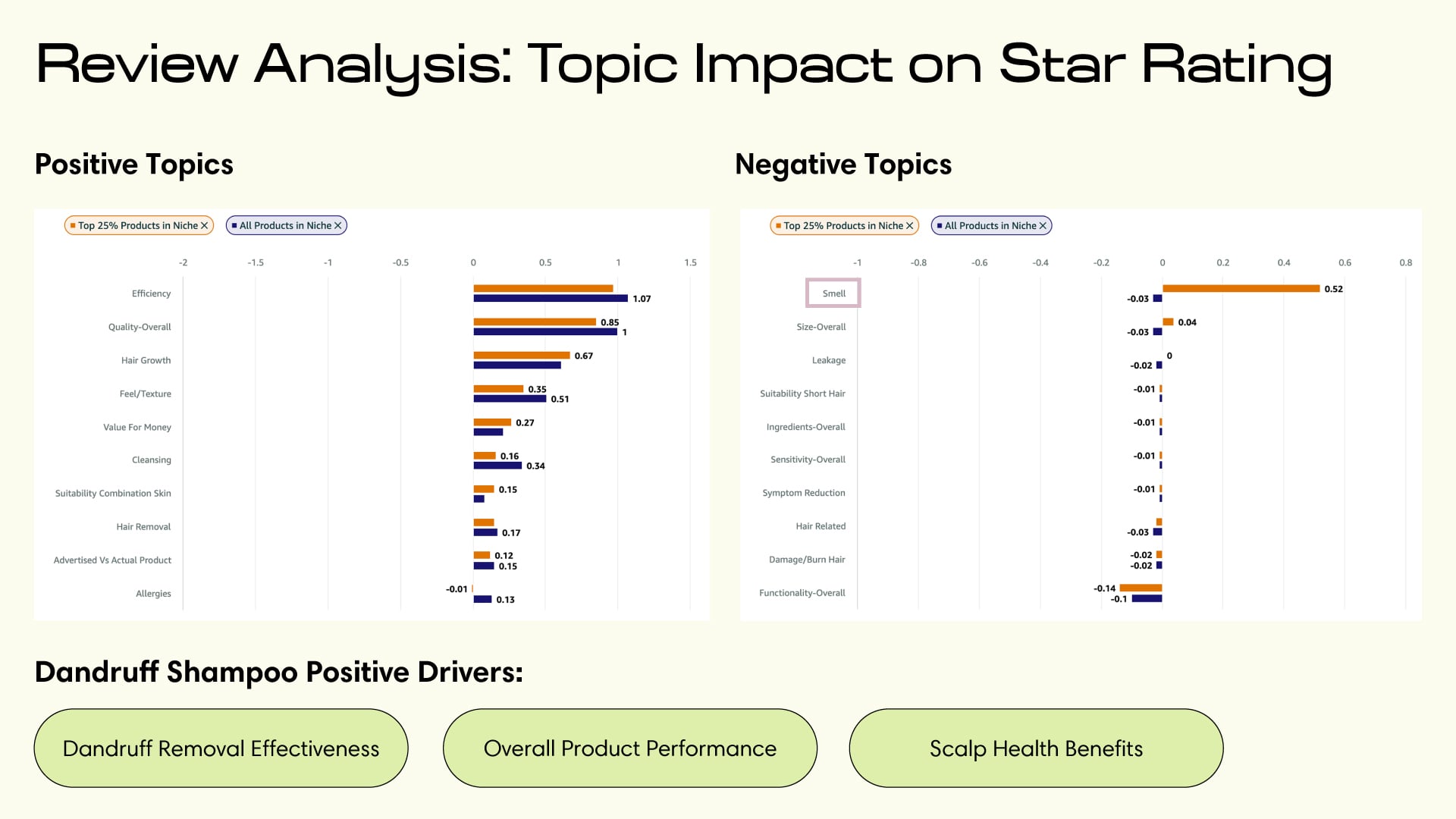
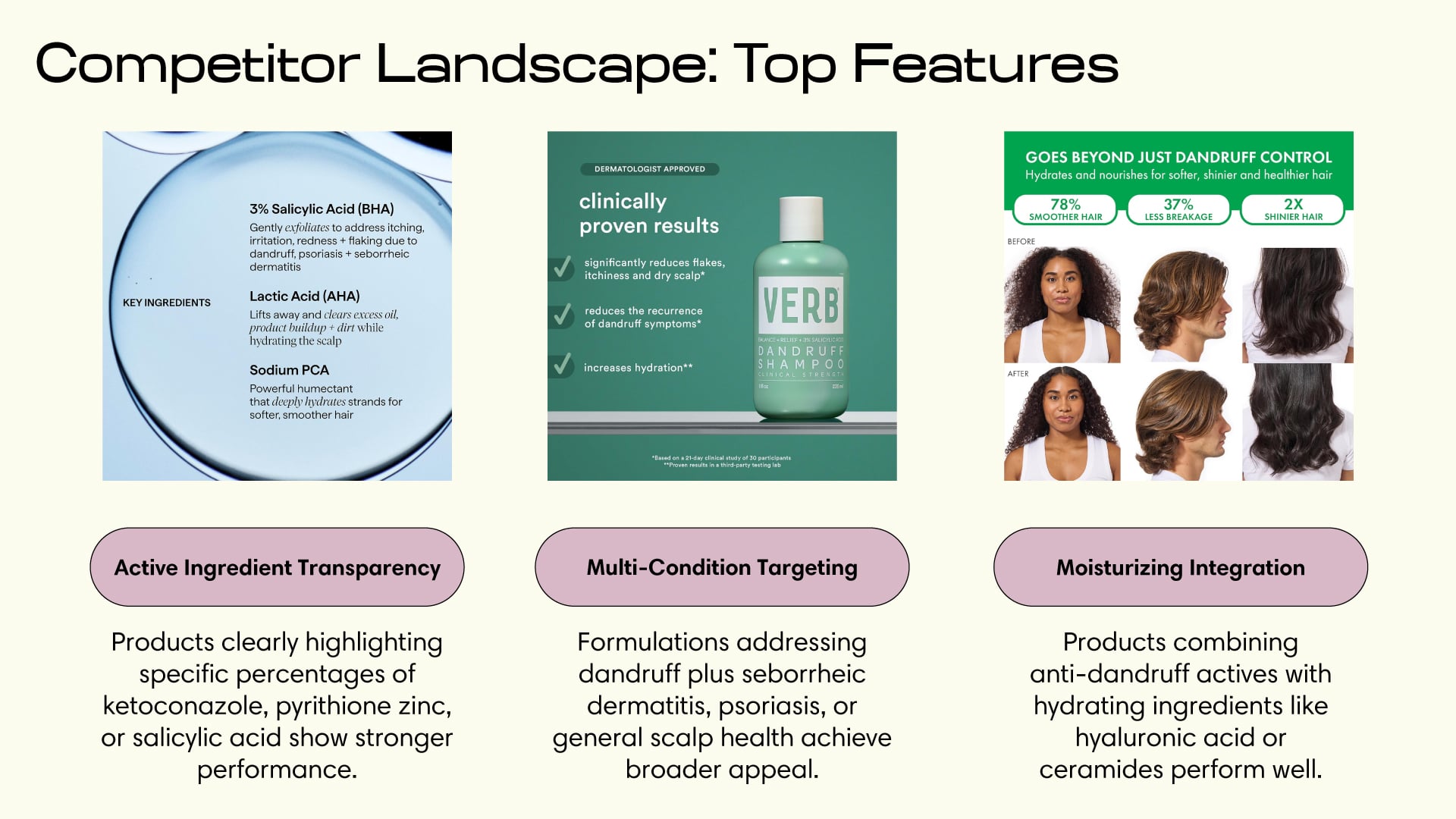
Before opening Figma, I ran a full creative audit of the anti-dandruff category on Amazon. The audit surfaced something the existing creative had missed: top competitors were competing hard on clinical efficacy — studies, before-and-after imagery, symptom-focused messaging — but almost no one was selling the experience of using the product. That gap was Jupiter's opening.
From there, I went deep into Jupiter's customer reviews, mining the language real buyers used to describe their results, their hesitations, and what finally made them convert. That language became the messaging hierarchy: scalp confidence first, ingredient efficacy second, product experience third. The sequence mattered.
Redesigning the product detail page
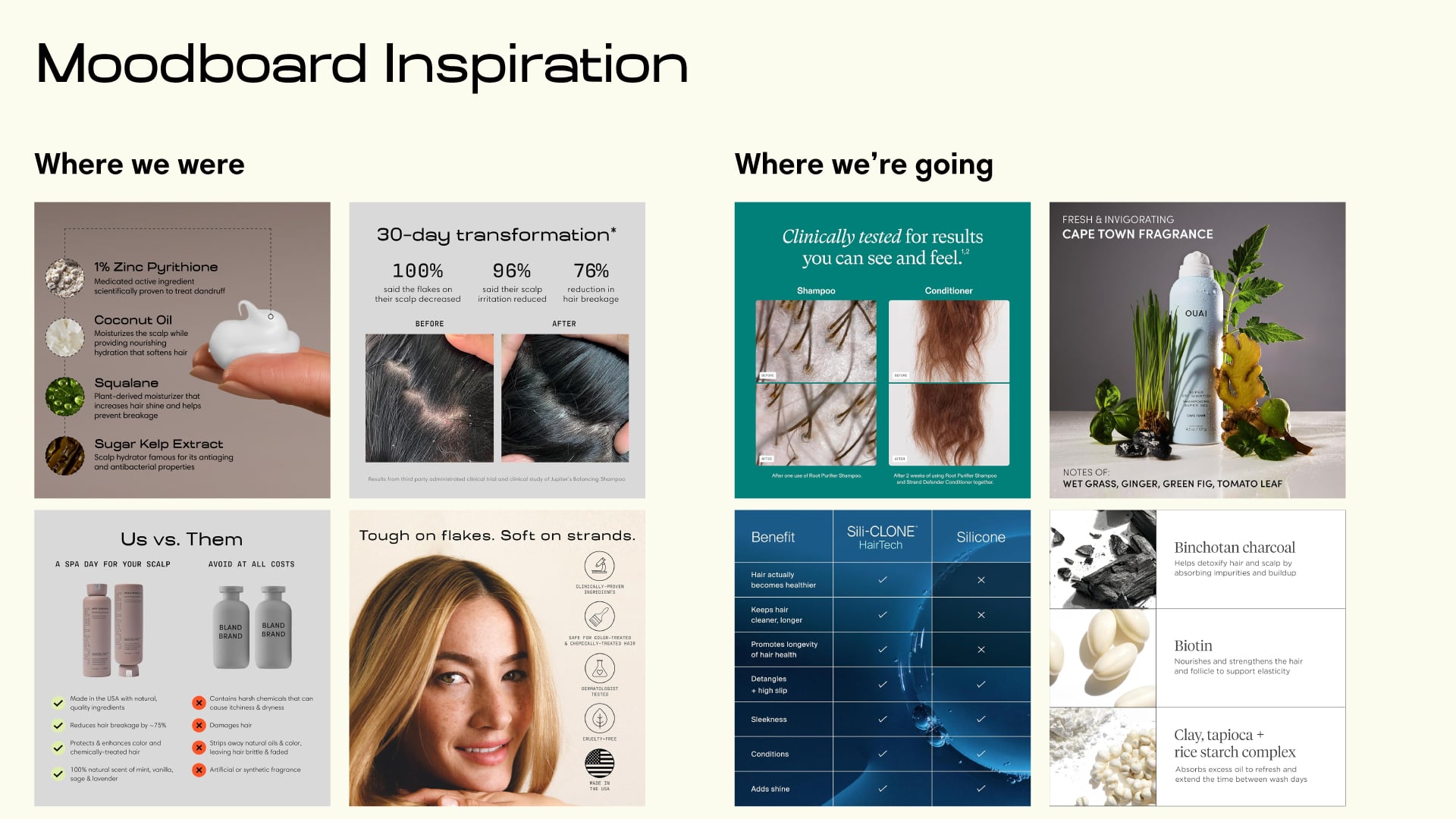
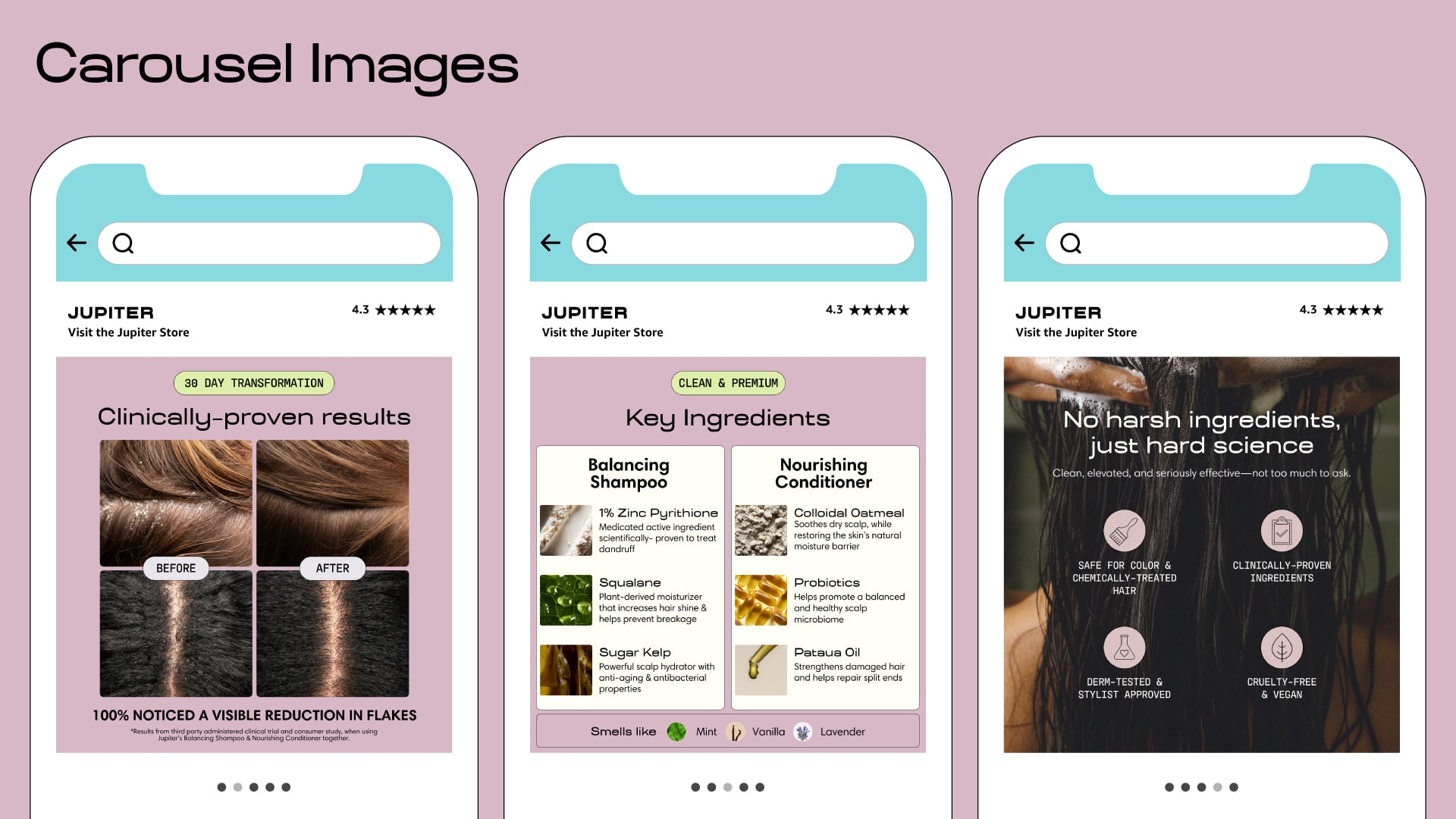
The carousel refresh centered on Jupiter's hero shampoo and conditioner duo. The existing listing had a foundation but wasn't working hard enough. The brand perception felt dated and the image hierarchy wasn't telling a clear story. I reviewed Jupiter's 2026 brand guidelines with their creative director before touching anything, so the visual decisions were grounded in where the brand was going, not where it had been.
Each image in the sequence was mapped to a specific job: establish the brand, communicate the benefit, address the key purchase objection, deliver social proof, close with the routine. New typography, elevated lifestyle photography, and a consistent visual system across every frame. The result was a listing that felt like the brand it was representing.
Building a store worth exploring
The original Jupiter Brand Store was a single-page experience. To support the goal of increasing average order value, shoppers needed more to discover and a reason to stay.
We rebuilt the homepage around Jupiter's hero duo, then developed dedicated pages to extend the journey: an anti-dandruff deep-dive, a net-new scalp brush page, and an about page to tell the founder story rather than just surface SKUs. Every page used the same visual language as the refreshed PDP, so whether a shopper landed on the listing or the store, they were in the same brand world. Pages per session increased 8.3%. Dwell time increased 18.4%.